Real Estate Google Reviews: QR Code Guide
Collect more Google reviews for your real estate agency with QR codes. Covers closing folders, open houses, business cards, and yard sign strategies.
How Real Estate Agencies Can Get More Google Reviews with QR Codes
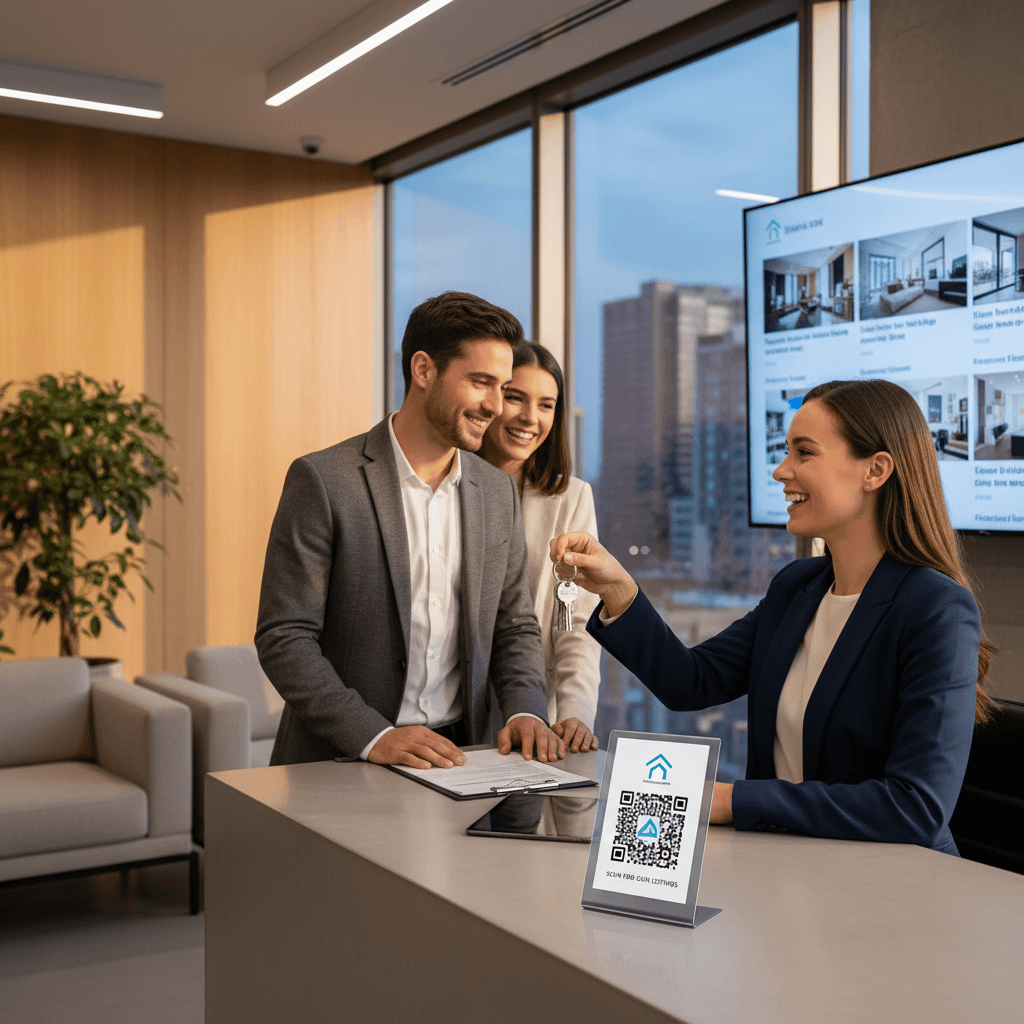
The paperwork is signed. The title has transferred. You slide a small envelope across the table, and the buyers — a young couple who've been searching for seven months — open it to find two brass keys on a simple ring.
She tears up. He puts his arm around her. They look at each other with that expression you've seen dozens of times but never get tired of: We did it. This is ours.
That moment, right there in the conference room with crumpled napkins and empty coffee cups, is the most powerful marketing asset your real estate business will ever produce. The gratitude is real. The relief is physical. And for the next 10 minutes, you are the person who made this happen.
But here's the problem: within 48 hours, the emotion fades into the chaos of moving. The boxes, the utilities, the change-of-address forms. That window of pure, overwhelming gratitude closes fast. And if you don't capture it, the best testimonial your business could ever receive disappears into a stack of cardboard boxes.
A QR code inside the closing folder changes that. One scan while the keys are still warm in their hands, and that life-changing moment becomes a permanent Google review that brings you your next client.
Why Reviews Are a Real Estate Agent's Best Lead Generator
Real estate runs on trust. A client is handing you the largest financial decision of their life — a transaction worth $200,000, $500,000, sometimes over a million dollars. Your commission on a single sale ranges from $8,000 to $15,000+. The stakes for both sides are enormous.
And yet, most agents still rely on the same lead generation tactics they used a decade ago: postcards, cold calls, and hoping someone at a dinner party says, "Oh, you should use my agent."
Meanwhile, 97% of homebuyers use the internet during their home search. When someone types "realtor near me" or "best real estate agent in [city]," Google shows three results in the local pack. The agent with 120 reviews at 4.9 stars gets the call. The one with 14 reviews at 4.2 stars doesn't even get a click.
Here's what makes real estate different from every other local service: each individual review has massive financial leverage. A restaurant might earn $50 from a review-influenced visit. A salon might see $80. But a single real estate review that convinces one new client to call you is worth $8,000 to $15,000 in commission. One review. One call. Five figures.
That math changes how you should think about review collection. This isn't a nice-to-have. It's the highest-ROI marketing activity available to a real estate professional.
Review signals account for approximately 15% of Google's local pack ranking factors. Every review you collect improves both your trust with potential clients and your visibility in the search results where those clients are looking.
The Keys-in-Hand Moment: Your Untapped Advantage
Every industry has an emotional peak — a moment where gratitude, relief, and joy converge into the perfect conditions for a five-star review. For flower shops, it's the delivery surprise. For jewelry stores, it's the ring box reveal. For auto detailers, it's the walkthrough reveal.
For real estate, it's the Keys-in-Hand Moment — the instant a buyer holds the keys to their new home for the first time.
This moment is uniquely powerful because of what it represents. It's not just a transaction. It's the culmination of:
- Months of searching — driving through neighborhoods, scrolling listings at midnight, attending open houses on weekends
- Weeks of negotiation — offers, counteroffers, inspection contingencies, the anxiety of waiting
- The weight of the biggest financial commitment of most people's lives
- A deeply personal milestone — first home, growing family, fresh start, dream neighborhood
All of that compresses into the 30 seconds when you hand over those keys. The relief is physical. The gratitude is directed squarely at you.
The reviews that come from this moment are unlike anything other industries produce. They're long. They're specific. They mention you by name, describe the challenges you navigated together, and read like personal letters of gratitude. A review that says "Sarah guided us through three rejected offers and never let us lose hope — we're sitting in our dream kitchen right now because of her" is worth more than a hundred generic five-star ratings.
The Keys-in-Hand Moment has a short half-life. Within 48-72 hours, the chaos of moving takes over. Your QR code needs to be in front of the client while they're still at the closing table or standing in the empty house holding those keys. Don't wait to send an email next week — by then, you've lost 80% of potential reviewers.
QR Code Placement Strategy for Real Estate
Real estate gives you more physical touchpoints than almost any other service industry. The challenge isn't finding places to put a QR code — it's choosing the right moments across a transaction that can span weeks or months.
The Closing Folder (Highest Conversion)
A branded card tucked inside the closing document folder, positioned so the client sees it when they open the folder for the first time. This is your highest-converting placement because it sits right next to the keys.
Format: A 4" x 6" card on premium stock. Your photo, your name, the QR code, and a warm message: "It's been an honor helping you find home. If you have a moment, I'd love to hear about your experience."
Why it works: The client is signing documents, receiving keys, and experiencing the emotional peak of the transaction. Your card is the first non-legal document they encounter. The emotional context does all the selling for you.
Conversion rate: 18-25%
The Congratulations Card
A handwritten note card given at closing or mailed within 24 hours. Include a small QR code at the bottom. The handwritten element makes this feel personal rather than transactional.
Why it works: Handwritten notes are rare in business. The personal touch increases the likelihood that the client actually reads the card, sees the QR code, and acts on it. Agents who combine a closing folder insert with a handwritten card report the highest overall conversion.
Conversion rate: 12-18%
Business Cards with QR Codes
Replace or supplement your standard business card with one that includes your review QR code on the back. Every time you hand out a card — at networking events, open houses, coffee meetings — you're planting a review touchpoint.
Conversion rate: 3-6% (lower per card, but high volume over time)
The Follow-Up Packet
A "welcome to your new home" packet left at the property before the client's first visit as homeowners. Include local restaurant recommendations, utility setup guides, a small housewarming gift, and your QR review card.
Why it works: The client walks into their empty house for the first time as owners and finds a thoughtful packet waiting for them. It reignites the Keys-in-Hand Moment in the actual home, not a conference room.
Conversion rate: 10-15%
Open House Sign-In Materials
A QR code on the sign-in sheet, property flyers, or a small countertop display at every open house. This captures reviews from attendees who appreciate your professionalism — even if they don't purchase that specific property.
Conversion rate: 5-8% (per open house, across all attendees)
Layer your touchpoints. A single closing can generate QR exposure from the closing folder, the congratulations card, and the follow-up packet. That's three chances to capture the review. Real estate transactions are too valuable to rely on a single touchpoint.
Buyers vs Sellers: Two Different Review Journeys
Real estate is one of the few industries where you serve two completely different clients with opposite emotional journeys. Your review strategy needs to account for both.
The Buyer's Journey
Buyers experience a clear emotional arc: excitement during the search, anxiety during negotiations, relief at closing, and joy when they move in. The Keys-in-Hand Moment is their peak.
Buyers tend to write reviews that tell a story. They describe the search process, the challenges, and how you helped them navigate to the finish line. These narrative reviews are incredibly persuasive to future buyers because they see their own anxieties reflected in someone else's happy ending.
Buyer Review Strategy
Do This
- ✓Place a QR card inside the closing folder — this is the highest-conversion moment
- ✓Leave a follow-up packet at the new home before their first visit
- ✓Send a handwritten congratulations card within 24 hours of closing
- ✓Follow up at the 30-day mark: 'How's the new house treating you?'
Avoid This
- ✕Ask for a review during the stressful negotiation or inspection phase
- ✕Send a generic mass email asking for reviews — keep it personal
- ✕Wait more than a week after closing — the moving chaos takes over
- ✕Forget first-time homebuyers — they write the most emotional reviews
The Seller's Journey
Sellers have a different emotional peak: the moment they accept an offer — especially one at or above asking price. After weeks of showings, staging, and waiting, hearing "you have an offer" triggers a rush of relief and validation.
But sellers also have a second peak: closing day, when the funds hit their account and the sale is officially complete. That financial confirmation is deeply satisfying.
Seller reviews tend to focus on results: how quickly you sold the home, how close to asking price, how smoothly you managed the process. These reviews are critical for winning future listings because prospective sellers want an agent who delivers results, not just warmth.
Seller Review Strategy
Do This
- ✓Send a congratulations email or card the day the offer is accepted
- ✓Include a QR code on the final settlement statement or in a thank-you card at closing
- ✓Mention the specific result in your ask: 'Sold in 12 days — if that exceeded your expectations, I'd love a quick review'
- ✓Follow up 2-3 weeks after closing when the seller is settled and has perspective
Avoid This
- ✕Ask for a review before the sale is finalized — too much can still go wrong
- ✕Ignore sellers because they 'weren't the buyer' — seller reviews are equally valuable
- ✕Send a review request the same day as a difficult negotiation
- ✕Assume sellers will review on their own — they need the same QR prompt as buyers
The Referral Multiplier: How Reviews Compound
Most local businesses collect reviews to influence strangers. Real estate reviews do that too — but they serve a second, equally powerful function: they activate your referral network.
Here's how the referral multiplier works:
Step 1: A client leaves a glowing Google review after closing.
Step 2: Their friends and family see the review (Google notifies people when someone in their network posts a review).
Step 3: Six months later, one of those friends mentions they're thinking about buying a house. Your former client says, "You have to use my agent" — and the friend has already seen the five-star review to back it up.
Step 4: The referred client closes. They leave their own review. The cycle repeats.
This isn't theoretical. The National Association of Realtors reports that 39% of buyers found their agent through a referral from a friend, neighbor, or relative. And 68% of buyers say they would use their agent again or recommend them. Google reviews are the digital accelerant for this already-powerful word-of-mouth engine.
Think about the math. If each review influences just one additional referral per year, and each referral is worth $10,000-$15,000 in commission, then a single Google review has a potential lifetime value that dwarfs any advertising spend. Ten reviews compounding over three years can generate six figures in referral business.
This is why the "low transaction volume" objection to real estate reviews misses the point entirely. You don't need 500 reviews a year. You need 50 deeply compelling reviews that compound through your referral network for years. Quality and specificity matter more than volume.
Case Study: Summit Realty Group, Austin TX
Summit Realty Group is a boutique agency in Austin with four agents. Before implementing a QR code review strategy, they had 19 Google reviews accumulated over five years. Their average rating was 4.4 stars. Most of the reviews were from personal friends and family of the agents — well-intentioned but generic.
The managing broker, David, had watched a competitor — a single agent with 85 reviews and a 4.9 rating — consistently outrank Summit in local search results. "She was getting calls from our neighborhood," David said. "People were driving past our office to meet with her because her Google profile looked better than ours."
What they did:
- Created a branded closing folder insert card with each agent's photo, name, QR code, and the line: "We helped you find home. Now help the next family find us."
- Designed a "Welcome Home" packet for every buyer closing: a tote bag with local restaurant gift cards, a neighborhood guide, and a QR review card
- Added QR codes to every open house sign-in sheet and property flyer
- Implemented a 30-day follow-up system: a handwritten card sent one month after closing with a QR code and the message "How's the new place? We'd love to hear how it's going."
- Started including a QR code on the back of all agent business cards
Results after 6 months:
The closing folder inserts drove 40% of all new reviews. The welcome home packets contributed another 20%. Open house sign-in QR codes — surprisingly — accounted for 25%, because they captured volume from attendees who were impressed by the agents' knowledge and professionalism. The remaining 15% came from the 30-day follow-up cards and business card QR codes.
"The open house reviews changed everything for us. We were only thinking about closed transactions, but we host 6-8 open houses a month. That's 150+ people walking through our listings every month. Even a 5% review rate from that traffic gave us more monthly reviews than our closed deals did. And those reviewers eventually become clients."
— David, Managing Broker at Summit Realty Group, Austin
The most significant outcome: Summit now ranks in the top three of Google's local pack for "real estate agent Austin" and "realtor Austin TX." Two of their four agents have individual profiles with 30+ reviews each. Referral inquiries increased by 45% — clients specifically mentioned reading reviews before reaching out.
The Seasonal Review Calendar for Real Estate
Real estate follows a predictable seasonal cycle, and each season brings a different type of client, a different emotional register, and a different review opportunity.
Spring Market (March -- May)
The busiest season for real estate. Inventory rises, buyers flood the market, and closings peak. This is your highest-volume review opportunity.
Why spring reviews matter: The sheer volume of transactions means you can collect more reviews in three months than the rest of the year combined. Spring closings also tend to be the most emotional — families buying before the school year, first-time buyers who've been saving for years, couples upgrading for a growing family.
Strategy: Full coverage on every spring closing. Closing folder insert, welcome home packet, and 30-day follow-up card. No exceptions. Prioritize first-time homebuyers — their reviews are the most detailed and emotional.
Summer Closings (June -- August)
Summer is closing season. Deals negotiated in spring finalize in summer. Families want to move before school starts, which creates urgency and relief when it all comes together on time.
Strategy: Maintain all touchpoints. Summer clients are often stressed about timing, so when the closing goes smoothly, the relief is intense. Lean into that: "You made it before September. If the experience was everything you hoped, we'd love to hear about it."
Fall Buyers (September -- November)
The fall market attracts serious, motivated buyers. Less competition means smoother transactions and more one-on-one attention from agents. These clients often feel like they got personalized service.
Strategy: Fall closings tend to produce reviews that highlight your responsiveness and personal attention. Your follow-up card can lean into this: "Working with you this fall was a pleasure — and I hope moving in before the holidays made it extra special."
Winter and New Year (December -- February)
Lower volume, but the clients you do close are highly motivated. Military relocations, job transfers, investors, and buyers who couldn't find something in the competitive spring market. These clients are grateful for an agent who works hard during the slow season.
Strategy: Winter closings are intimate. A handwritten card carries extra weight during the holiday season. "Congratulations on starting the new year in your new home" — timed right, this message resonates deeply.
Don't pause your review efforts during slower months. Consistent review activity signals to Google that your business is active year-round. An agent who collects 3-5 reviews per month every month will outrank one who collects 20 reviews in spring and zero in winter.
Open Houses: The Hidden Review Opportunity
Here's the insight most agents miss: you don't need to close a deal to earn a review.
Open houses are the single highest-volume touchpoint in a real estate agent's business. A typical open house draws 15-30 visitors over a few hours. A busy agent hosting 4-6 open houses per month is meeting 60-180 potential reviewers every month — without a single closing.
These attendees are actively shopping for a home. They're evaluating neighborhoods, price points, and — critically — agents. When you host an informative, professional open house, you make an impression. Many of those attendees will remember you when they're ready to choose an agent.
A QR code at the open house converts that positive impression into a Google review while it's still fresh.
How to Collect Reviews at Open Houses
Sign-in table: Place a small acrylic display next to the sign-in sheet. Message: "Enjoyed the tour? We'd love your feedback."
Property flyer: Include a QR code at the bottom of every property flyer or information sheet. Attendees take these home, and some will scan the code later that evening.
Follow-up email: If you collect email addresses at sign-in (which you should), send a brief follow-up within 24 hours: "Thanks for visiting [address]. If you found the open house helpful, a quick review means the world to us." Include the QR link.
The exit conversation: As attendees leave, a natural close is: "Thanks for coming by. If you have any questions about the neighborhood, I'm here — and if the open house was helpful, there's a QR code on the flyer to share your experience."
Why Open House Reviews Are Strategically Valuable
Open house reviews solve real estate's biggest review challenge: transaction volume. A solo agent might close 24-36 transactions per year. Even at a 20% review rate, that's only 5-7 reviews per year from closings alone.
But that same agent hosting 4 open houses per month, with 20 attendees each, reaches 960 people per year. Even a modest 3-5% review rate from open house attendees adds 30-50 reviews per year — transforming a trickle into a steady stream.
These reviews also serve a different purpose. While closing-day reviews are emotional testimonials, open house reviews highlight your professionalism, market knowledge, and approachability. Together, they paint a complete picture of an agent that future clients trust with their biggest financial decision.
Setup Guide: 20-Minute Implementation
You have a closing this week. Here's how to have your QR code review system ready before you slide the keys across the table.
Implementation Steps
- 1
Generate your QR code
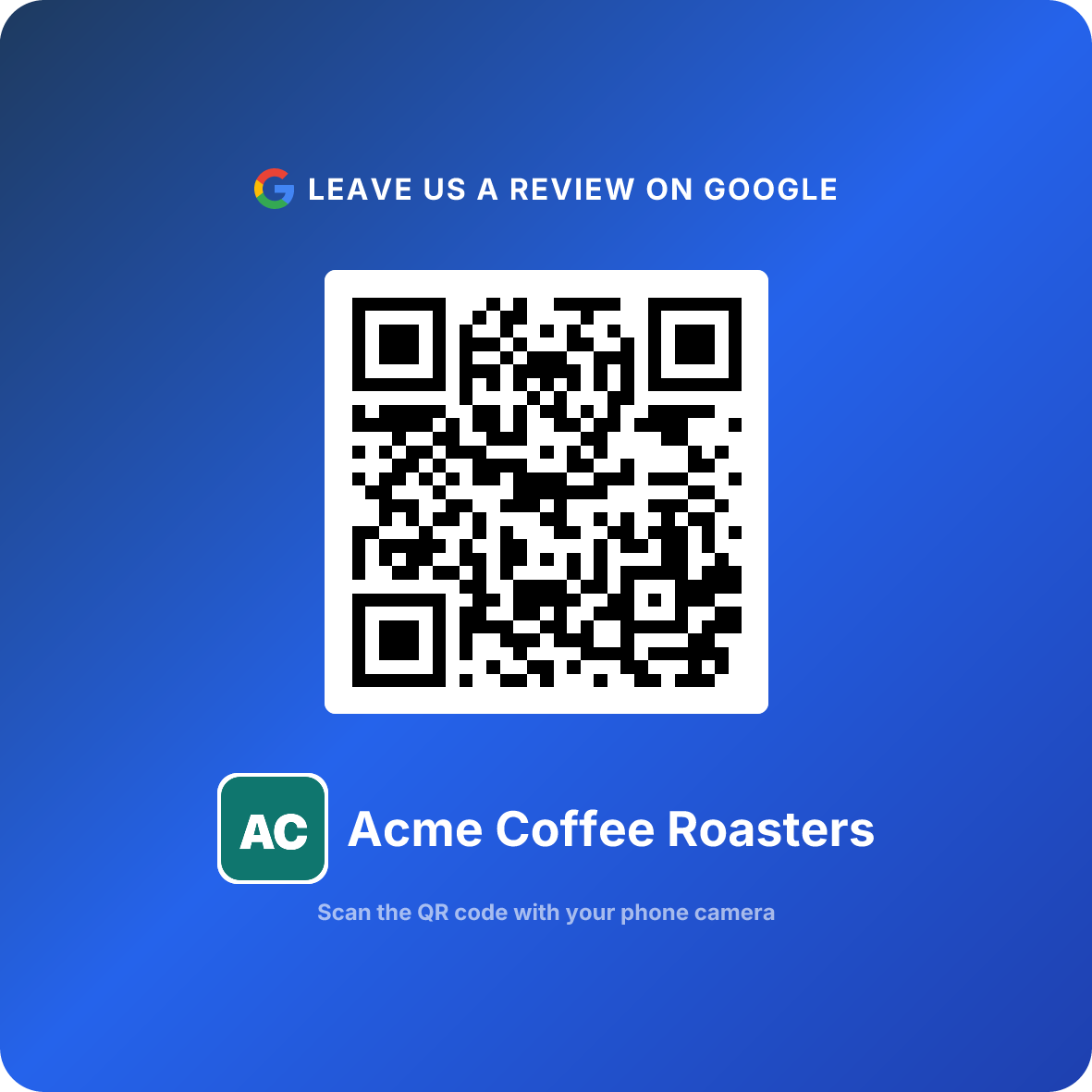
Use the ReviewQR generator to create a QR code linked directly to your Google review page. Download the high-resolution file. This takes 2 minutes.
- 2
Design your closing folder insert
Create a 4x6 card with your headshot, name, brokerage, QR code, and a warm one-line message. Use quality card stock — this sits inside a folder alongside legal documents, so it needs to feel professional.
- 3
Print a starter batch
Print 50-100 cards to start. You won't go through them as fast as a restaurant, but you want enough for closings, open houses, and your welcome home packets. Most print shops offer 24-48 hour turnaround.
- 4
Add the QR code to your business card
Update your business card template to include the review QR code on the back. This turns every networking interaction into a potential review touchpoint.
- 5
Create your open house display
Print a small acrylic sign or countertop card for open houses. Keep it simple: your QR code, your name, and 'Enjoyed the tour? Share your experience.' Bring this to every open house.
- 6
Set up your 30-day follow-up
Add a calendar reminder for 30 days after every closing. Send a handwritten card with your QR code and a personal note about their new home. This catches clients who missed the closing-day touchpoint.
You can create your QR code now and have everything printed before your next closing.
Expected Results
Real estate has lower transaction volume than most local businesses, but the review quality and financial impact per review are dramatically higher. Here's what to expect with QR codes at every touchpoint.
The breakdown matters. Roughly 40% of reviews come from closed transactions (buyers and sellers at the closing table). Another 30-35% come from open house attendees who appreciated your professionalism and market knowledge. The remaining 25-30% come from follow-up touchpoints — the 30-day card, the welcome home packet, and business card interactions.
Agents who host open houses consistently hit the upper range because open houses solve the volume problem. A solo agent closing 3 deals per month but hosting 5 open houses is reaching 100+ potential reviewers monthly.
The compounding effect is especially powerful in real estate. Every review improves your local search ranking, which brings more buyer inquiries, which leads to more closings, which generates more reviews. And every review activates your referral network, creating a parallel growth channel that amplifies over time.
Your Review Growth Timeline
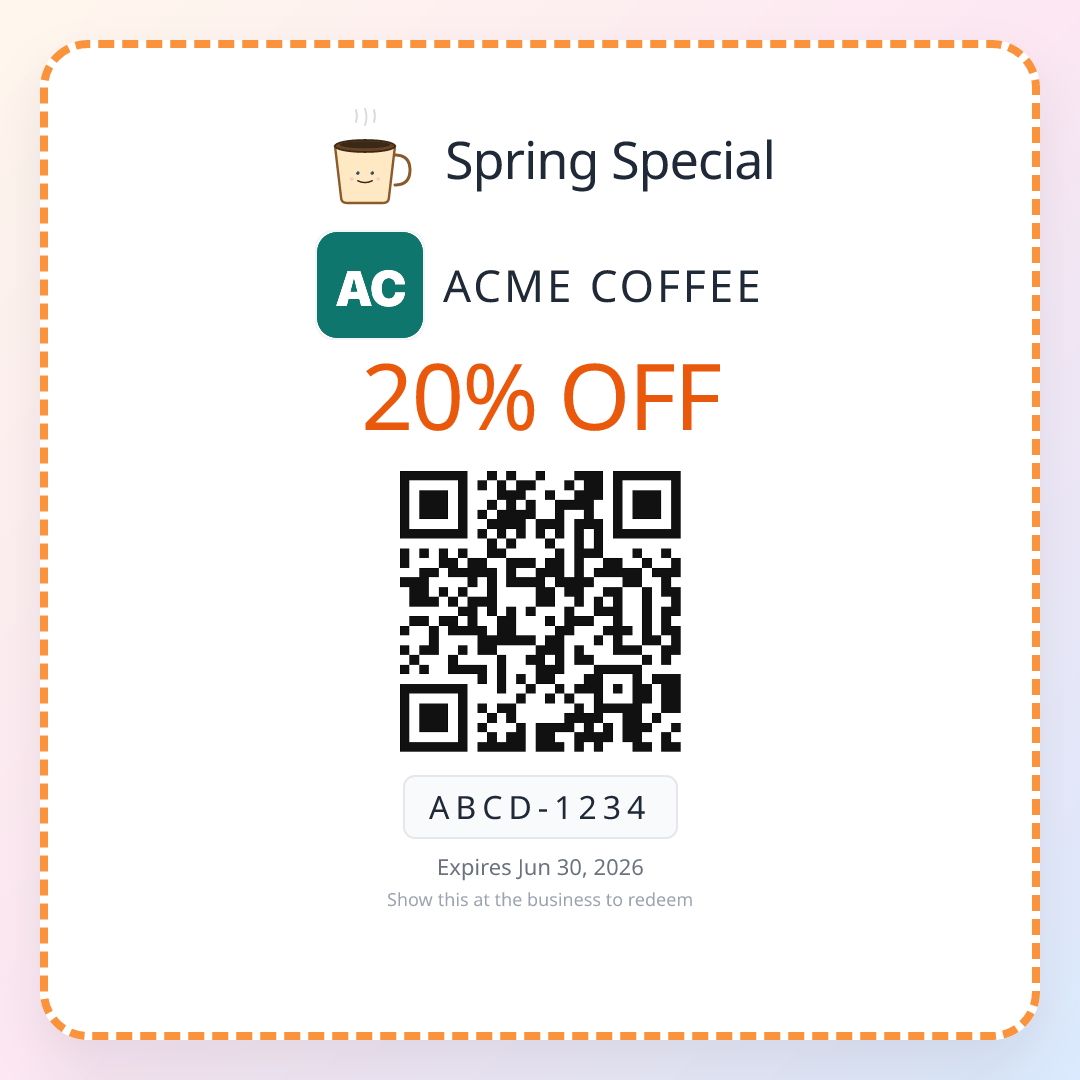
Reviews open the door; staying memorable keeps it open. After a closing-day review, hand clients a QR coupon for a local move-in service or a referral perk so your name is the one they pass along when a friend starts house-hunting.
Create Your Real Estate QR Code Now
Frequently Asked Questions
When is the best time to ask a real estate client for a Google review?
The Keys-in-Hand Moment — the day of closing when the buyer receives the keys to their new home. This is the peak emotional moment of the entire transaction: months of searching, negotiating, and paperwork culminate in a single tangible symbol. A QR code inside the closing folder or on a congratulations card converts at 18-25% because the gratitude is overwhelming and immediate.
How do I get Google reviews from both buyers and sellers?
Buyers and sellers have different emotional peaks. Buyers peak at closing day when they get their keys. Sellers peak when they accept an offer — especially above asking price. Use a closing folder QR insert for buyers and a follow-up email or handwritten card with a QR code for sellers, timed 1-2 days after the sale is finalized.
Is it against Google's policy to offer a gift card for real estate reviews?
Yes. Google strictly prohibits incentivized reviews. You cannot offer gift cards, closing gifts contingent on reviews, or any other compensation. What you can do is make leaving a review effortless with a well-placed QR code during the natural emotional high of a closing. The life-changing experience of buying or selling a home is all the motivation most clients need.
Can I use QR codes at open houses to collect reviews?
Absolutely. Open houses are one of a real estate agent's best review opportunities because they generate high foot traffic from people who are actively engaged in the home-buying process. A QR code on the sign-in table, property flyer, or a countertop display invites attendees to review your professionalism and helpfulness — even if they don't buy that particular home.
How many Google reviews can a real estate agent expect in 6 months?
A solo agent closing 2-3 transactions per month and hosting 4-6 open houses per month can realistically collect 25-45 new reviews in six months. A small team of 3-5 agents can reach 60-100+. The key is capturing reviews from open house attendees and past clients — not just closed transactions — to build volume despite the lower transaction frequency.
Do real estate reviews actually help get more listings and buyers?
Yes. 97% of homebuyers use the internet during their home search, and 82% say online reviews are as trustworthy as a personal recommendation. Agents with 50+ reviews at 4.8 stars or higher consistently report that new clients mention their reviews as the deciding factor. Each review also improves your visibility in Google's local pack for searches like "realtor near me."
Keep reading
Restaurant Google Reviews: 40-60 New in 90 Days (QR)
How restaurants collect 40-60 Google reviews in 90 days with table-tent QR codes. Real placement data, server scripts, conversion rates by placement, and what to avoid.
Beauty & WellnessHow Salons & Spas Can Get More Google Reviews with QR Codes
Proven QR code strategies for salons and spas to collect more Google reviews. Learn the Post-Service Bliss Window, best placements, and real conversion rates.
guidesHow to Get More Google Reviews: The 7 Moments That Work
How to get more Google reviews for your business without being pushy or breaking the rules: the seven moments when happy customers actually leave one, the direct review link, an eight-word script, the math of a QR code on the counter, and the mistakes that get reviews removed.