23 Coupon Ideas for Small Business: Win Customers, Boost Sales, Build Loyalty
23 proven coupon ideas for small business — grouped by goal: attract new customers, raise the average sale, and turn first-timers into regulars. Plus how to keep them margin-safe.
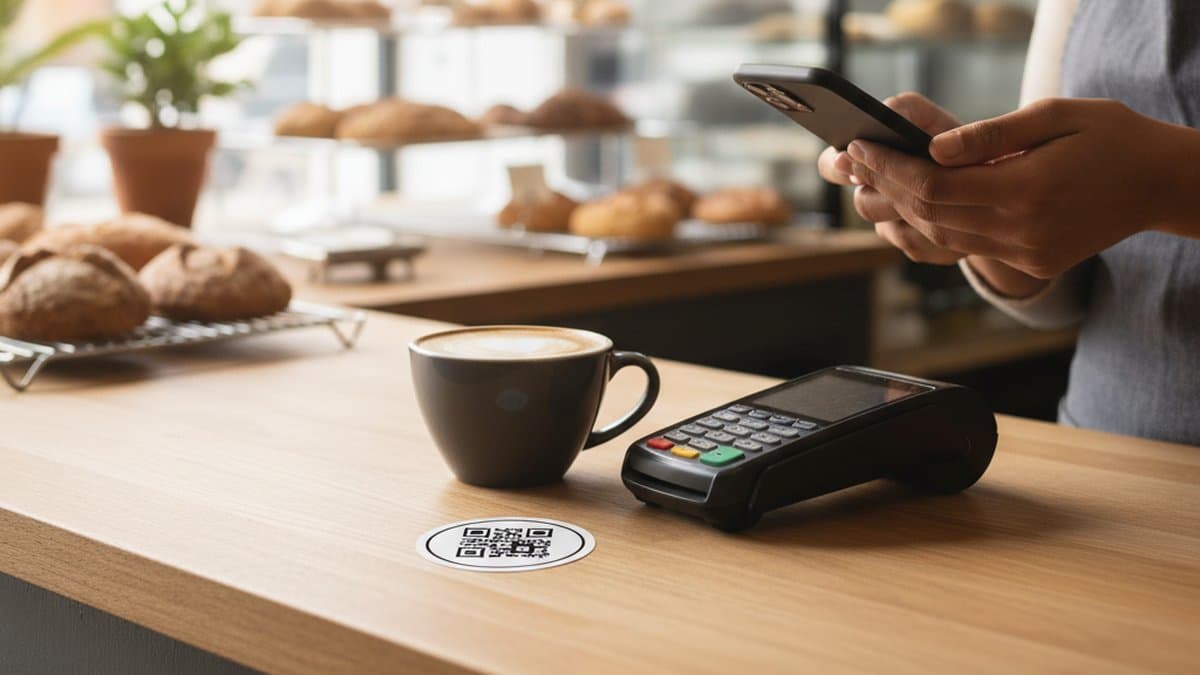
23 Coupon Ideas for Small Business: Win Customers, Boost Sales, Build Loyalty
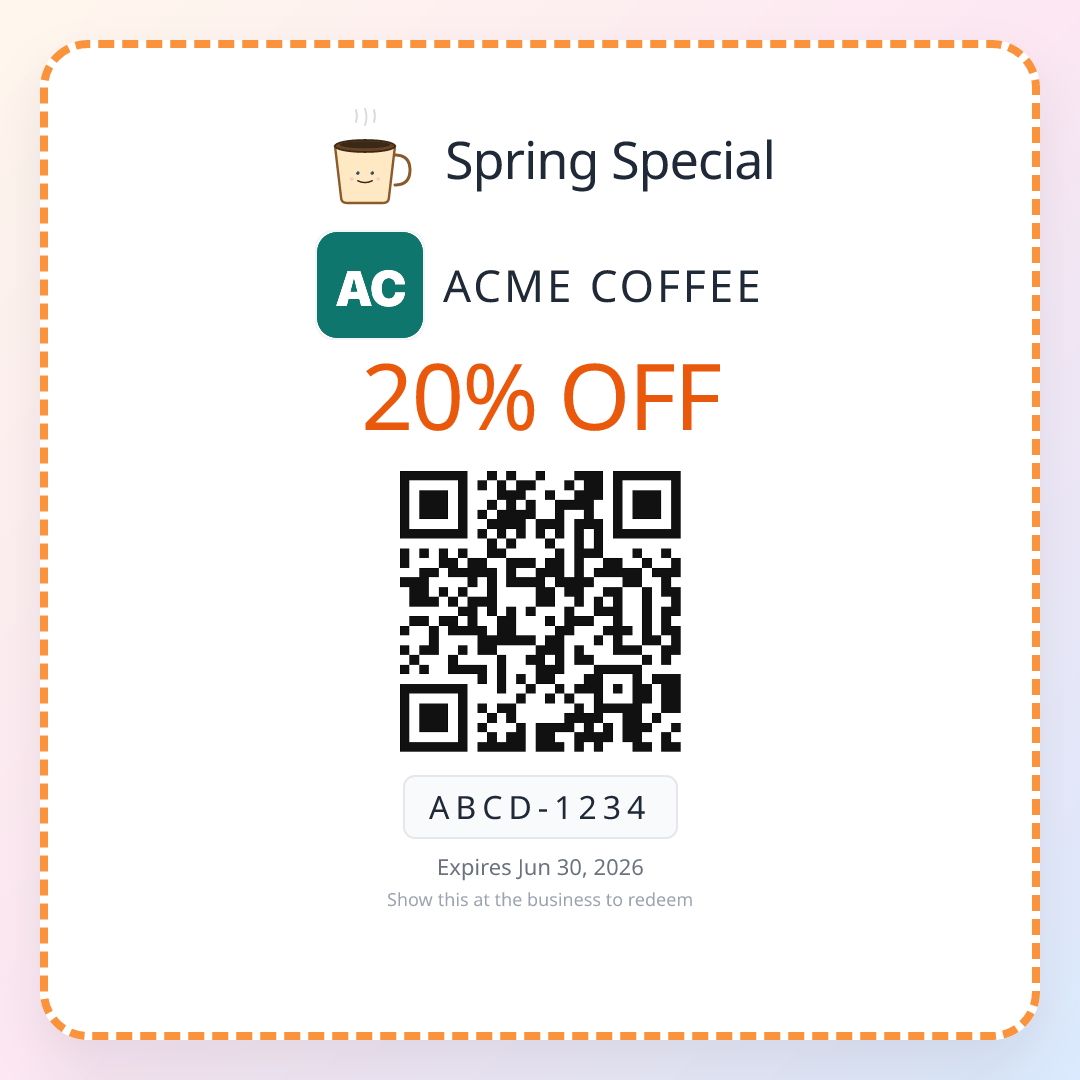
About 69% of consumers say they'd switch brands to use a coupon they got on their phone, and emails carrying a coupon code earn roughly 48% more revenue per send. For a small business, that's not a "nice discount" stat — it's a lever. The problem is that most owners reach for the same blunt 10%-off-everything coupon, watch it shave margin off sales they'd have made anyway, and conclude that coupons don't work.
They do work. You just have to point them at a goal.
This guide is a menu of 23 coupon ideas for small business, grouped by the three things every local business actually wants more of: new customers, bigger average sales, and repeat visits. Pick the goal first, then pick the coupon. At the end, there's a section on keeping every one of them margin-safe and trackable — because an untracked coupon is just a guess with a discount attached.
Why coupons still work (the numbers)
The instinct to avoid discounts is healthy — but it conflates two very different things. A blanket sale lowers the price of everything to everyone, including the customers who'd have paid full price. A coupon, used well, is a targeted incentive that changes one specific behavior: a first visit, a larger basket, a faster return.
That last number is the one to sit with. Most of your revenue, statistically, will come from people who've already bought from you once. So the highest-leverage coupons aren't the ones that win a stranger — they're the ones that turn that first stranger into a second, third, and tenth visit. We'll cover all three goals, but the loyalty ideas are where the math is quietly biggest.
Step one: pick the goal, then the discount
Before you decide on a number, decide on a job. Every coupon should be answerable in one sentence: "This exists to make [who] do [what]." If you can't fill that in, you're about to discount blindly.
There are really only three jobs:
- 1
Acquisition — win a new customer
The goal is the first transaction. You're paying (in discount) for a trial. Be generous: a free item or a 20–25% welcome offer buys a habit you can monetize for years.
- 2
Basket size — raise the average sale
The customer is already buying. The goal is to make them buy more in this visit. Tie the discount to a threshold or a bundle so it only triggers when they spend more.
- 3
Retention — earn the next visit
They already like you. The goal is speed and frequency of return. A small nudge works because you're not buying trust, just shortening the gap to the next visit.
Keep this framing in your head as you read the 23 ideas below. The same "20% off" coupon is brilliant for acquisition and wasteful for retention. The goal sets the offer, not the other way around.
Coupon ideas to attract new customers
These are built to convert a stranger into a first transaction. Be generous here — you're underwriting a trial, and the lifetime value of a regular dwarfs the cost of one discounted first order.
- First-visit / new-customer discount. "15% off your first order" or "Free [signature item] on your first visit." The single most reliable acquisition coupon there is.
- Email-signup coupon. Offer a coupon in exchange for an email address. You win the customer and a marketing channel you can re-use for every idea further down this list.
- Neighborhood welcome. A door-drop or counter flyer for nearby residents and the businesses around you — "New to the block? Here's 20% off to say hello."
- Social-follow coupon. "Follow us and show this for a free add-on." Trades a small discount for a follower who'll see everything you post next.
- Grand-opening / new-location coupon. A time-boxed launch offer that creates a reason to come this week, not "sometime."
- Cross-promotion with a neighboring business. The gym hands out your café coupon; you hand out theirs. Two customer lists, zero ad spend.
- Event or market coupon. Working a fair, pop-up, or farmers' market? A single-use coupon turns a one-off browser into a customer who comes to your actual shop.
- Review thank-you coupon. Hand a coupon to customers who leave you a Google review — a thank-you for the behavior, never payment for a positive rating. (More on doing this within Google's rules in our guide to asking for reviews without being pushy.)
Acquisition coupons are the one place to be brave with the discount. A free coffee costs you cents; the regular it creates is worth hundreds a year. Measure these on the second visit, not the first — the first visit is the cost, the second is the return.
Coupon ideas to boost the average sale
These customers are already buying. The job is to lift the basket — get them to add an item, cross a threshold, or trade up. Every one of these is engineered so the discount only fires when they spend more.
- Spend-and-save threshold. "$5 off when you spend $30." The cleanest basket-builder there is — easy to predict against margin, and it nudges every customer toward the threshold.
- Buy-one-get-one (BOGO). "Buy one, get the second 50% off." Simple, compelling, and it moves two units instead of one.
- Bundle deal. Package complementary items at a coupon price — "Any main + side + drink for $X." Raises the ticket and showcases items people wouldn't have tried alone.
- Free gift over a threshold. "Free [add-on] when you spend $40." A gift feels more generous than a discount and costs you less than the equivalent percentage off.
- Tiered discount. "$5 off $25, $12 off $50." Rewards bigger baskets more, so customers reach for the next tier.
- Add-on / upsell coupon. A coupon for the high-margin extra people forget — the dessert, the detail wax, the conditioning treatment.
- "Next visit, bigger" coupon. Handed at checkout — "$10 off your next order of $40+." Sets up a larger future basket while today's sale is still warm.
The threshold is your margin seatbelt
A flat "$5 off" can discount a $6 sale into oblivion. "$5 off $30" can't — it only ever fires on a basket big enough to absorb it. Whenever you're nervous about margin, attach a spend threshold. It turns a discount into an incentive to spend more, which is the entire point.
Coupon ideas to turn first-timers into regulars
This is where the 61%-of-revenue-from-repeat-buyers stat lives. These coupons are cheap to run because the customer already trusts you — you're just shortening the gap to the next visit and stacking visits into a habit.
- Bounce-back coupon. Handed at checkout, redeemable only on the next visit — "Come back within 14 days for 15% off." Manufactures a second visit, which is the hardest and most valuable one to get.
- The "fifth visit free" card-killer. Replace the paper punch card — after the fourth visit, hand a single-use "Your fifth is on us" coupon. No app, no lost card.
- Birthday coupon. Most booking and POS systems already store birthdays. A "Free [signature item] for your birthday week" coupon is warm enough that customers actually talk about it.
- Win-back / "we miss you" coupon. For customers who haven't returned in 60–90 days, sent by email or WhatsApp with a real offer and a real deadline. (For the full retention playbook, see how to get repeat customers for a restaurant — the mechanics work for any local business.)
- VIP / early-access coupon. Reward your best customers with first access to a new product or a members-only price. Status is its own incentive.
- Referral hand-off coupon. Give a regular a few single-use coupons to pass to friends — "Free [item], on me." They get to feel generous; you get a measurable new-customer channel.
- Seasonal / anniversary coupon. Tie a coupon to a moment — the customer's one-year anniversary with you, a seasonal peak, a slow shoulder month you want to fill.
- Slow-day refill coupon. Hand out coupons on your busiest day that are only valid on your slowest — customers self-select into your dead hours and your peak revenue stays at full price.
The coupon-type cheat sheet
Same 23 ideas, sorted by mechanic — so you can match the offer to the goal at a glance.
| Coupon type | Best goal | Example offer | Watch-out |
|---|---|---|---|
| Percentage off | Acquisition | "20% off your first visit" | Uncapped % can gut margin on big orders |
| Fixed amount off | Basket size | "$5 off $30" | Always pair with a spend threshold |
| Free item / gift | Acquisition & loyalty | "Free coffee on your birthday" | Pick a low-cost, high-perceived-value item |
| BOGO | Basket size | "Buy one, get one 50% off" | Make sure two units still profit |
| Bundle | Basket size | "Main + side + drink for $X" | Bundle things people don't usually pair |
| Bounce-back | Retention | "15% off your next visit, 14 days" | Short expiry is what makes it work |
| Loyalty / Nth-visit | Retention | "5th one free" | Single-use codes prevent abuse |
| Win-back | Retention | "Come back — coffee's on us" | Target only lapsed customers |
| Referral | Acquisition | "Give a friend a free [item]" | One redemption per code, or it leaks |
The discount trap (and how to dodge it)
The reason coupons get a bad reputation is real: run them carelessly and you train customers to wait for the discount. The Tuesday regular who used to pay full price learns that there's always a 10%-off coupon floating around, and your margin quietly bleeds.
Three rules keep you out of the trap:
Do This
- ✓Tie every coupon to a behavior — a first visit, a threshold, a return window. The discount should pay for something you didn't already have
- ✓Put a real expiry on it. 'This week only' creates urgency; 'whenever' creates a permanent discount
- ✓Make it single-use, so one offer equals one redemption — no photocopies, no screenshots passed around a WhatsApp group
- ✓Check the offer against your margin before you print. The redeemed order still has to make money
Avoid This
- ✕Don't run the same public discount on a standing basis — that's just a lower price, and customers will wait for it
- ✕Don't discount your best-selling, full-price items by default. Discount the trial, the add-on, or the slow day instead
- ✕Don't make a coupon conditional on a positive Google review — it violates Google's policy and risks your profile
- ✕Don't run a coupon you can't measure. If you can't count redemptions, you can't tell a winner from a money-loser
Make every coupon single-use and trackable
Every idea above shares one requirement: you need to know how many people actually redeemed it. A coupon you can't count is a guess. And a coupon that can be photocopied or screenshotted-and-forwarded isn't single-use — it's an open discount with a picture on it.
This is exactly what single-use QR coupons solve. You create a campaign, set the offer and an expiry, and generate a sheet of unique QR stickers (or shareable links). Each code can be redeemed once: the customer shows the sticker or screenshot, you scan it with your phone, tap redeem, and it's spent. The next scan of that same code shows as already used. The redemption count is your exact conversion number — no estimating.
ReviewQR starts every plan with a 14-day free trial, so you can run one of the ideas above this week and see real redemption numbers before your first bill. Essentials is $10/month for 100 coupons with your own logo on the stickers and full redemption analytics, and Growth is $25/month for 500. If you want to compare the options first, we broke them down in the best QR coupon app for small business, and there's the full feature walkthrough in our QR Coupons launch guide.
Create your first QR coupon
A corner-shop example: six weeks, three coupons
Maya runs a single-location coffee-and-pastry shop. Plenty of morning regulars, dead afternoons, and a steady trickle of newcomers who'd visit once and vanish. She didn't change her prices — she ran three coupons over six weeks, one per goal.
- Weeks 1–2 (acquisition): a "Free pastry with any drink, first visit" coupon handed to anyone who walked past during the afternoon lull.
- Weeks 3–4 (basket size): a "$2 off when you spend $12" coupon at the counter, nudging single-coffee customers toward a coffee-and-snack.
- Weeks 5–6 (retention): a "Come back this week, second coffee's on us" bounce-back, single-use, seven-day expiry.
"I'd avoided coupons for years because I thought I was just giving away money. The difference was attaching each one to a job — win them, grow the basket, get them back. The bounce-back alone paid for the whole month, and I could see the exact number redeemed instead of guessing." — Maya, café owner
The point isn't the specific numbers — it's the method. One coupon per goal, each single-use, each measured. That's a system, not a sale.
Build your first coupon this week
Don't try to run all 23. Pick the goal that hurts most right now and run the matching coupon.
Your first three campaigns
- Hurting for new customers? Run a first-visit coupon (idea #1) — be generous, measure the second visit.
- Plenty of traffic but small tickets? Run a spend-and-save threshold (idea #9) — instant, margin-safe basket lift.
- People come once and vanish? Run a bounce-back coupon (idea #16) — the highest-ROI coupon a local business can run.
Three campaigns, all single-use, all trackable. You'll know within two weeks which one to scale.
If you're not collecting Google reviews yet, start there — the review QR generator sets up your review loop in a couple of minutes, and the same account runs your coupons. Reviews bring the strangers in; coupons turn them into regulars. That's the whole flywheel.
Frequently asked questions
What are the best coupon ideas for a small business?
Start with three: a first-visit discount to win new customers, a spend-and-save threshold to raise the average ticket, and a bounce-back coupon redeemable on the next visit to drive a second sale. They cover the three goals every local business has — acquisition, basket size, and retention — and you can run all three in a single month.
Do coupons actually increase sales for small businesses?
Yes, when they're targeted. Around 69% of consumers say they'd switch brands for a mobile coupon, and emails with a coupon code earn roughly 48% more revenue per send. The trick is using coupons to change behavior — a first visit, a bigger basket, a faster return — not to discount sales you'd have made anyway.
How do I stop coupons from hurting my profit margins?
Make every coupon single-use, time-bound, and tied to a behavior. A standing public discount trains customers to wait for the markdown; a single-use coupon with a real expiry doesn't. Set a threshold ("$5 off $30") so the discount lifts the basket, and never discount your best-selling, full-price items by default.
What's the best discount amount for a small business coupon?
It depends on the goal. For a first visit, a generous offer (a free item or 20–25% off) buys the trial. For repeat visits, a smaller nudge (10–15% off, or a free add-on) is enough because the customer already likes you. Always check the discount against your margin before printing — the offer has to leave you profitable on the redeemed order.
How can I track whether my coupons are working?
Give each campaign its own unique, single-use codes and count the redemptions. Single-use QR coupons make this automatic — each sticker can only be claimed once, so the redemption count is your exact conversion number, with no guessing about photocopies or screenshots.
Are digital or printed coupons better for small businesses?
Both, for different jobs. Printed coupons (stickers, table tents, flyers) work in-store and at the counter where the customer is already in front of you. Digital coupons sent by WhatsApp, email, or SMS work for win-back and birthdays. Most owners run both from the same campaign — print for walk-ins, send links for follow-ups.
Keep reading
Black Friday for Small Business: The Plan That Starts at Halloween
You cannot out-discount Amazon. A five-step coupon plan for a small shop: hand it out at Halloween, get them back on Black Friday weekend and Small Business Saturday, count who came. With the 200-coupon math.
guidesGoogle Review QR Code Stand, Sign, Sticker or Poster: Which One, and Where
A Google review QR code gets scanned where customers wait, not where they walk. How to choose between a stand, sign, sticker, poster or plaque, what size to print each one, what to write on it, and the numbers on moving one code three meters.
guidesHow to Delete a Google Review (and What to Do When Google Says No)
Business owners cannot delete Google reviews, but they can report the ones that break policy, appeal a rejection, ask the reviewer, or file a legal request. Here is each route step by step, how to delete a review you wrote yourself, and the math for burying one bad review under good ones.